6th February 2026
- Blog
DIRECT ANSWER: Stop-motion works because it’s filmed reality: real materials, real light, real constraints. AI video is simulated: it can look coherent, but often lacks believable physical history, the tiny cues viewers use to decide “this is real”. If you’re running brand campaigns, that difference shows up as trust, premium feel, and fewer “this looks fake” reactions.
In 2025, we’re witnessing an advertising inflection point. Brands are choosing between two fundamentally different paths: the tactile authenticity of stop-motion animation, or the speed and apparent efficiency of AI-generated video. Yet efficiency means little if audiences scroll past because something feels “off”, or worse, if the creative becomes a liability.
The promise of AI video is seductive: faster timelines, infinite variations, no physical constraints. But recent high-profile failures reveal a critical blind spot. When Coca-Cola replaced their beloved stop-motion Christmas trucks with an AI recreation, the backlash was immediate. McDonald’s Netherlands pulled their AI holiday ad after just three days of “nightmare fuel” comments. Google’s Super Bowl Gemini spot quietly corrected a factual hallucination about cheese statistics.
What marketing and procurement teams are learning: in advertising, there’s no such thing as “AI slop that doesn’t matter.” Every frame either builds trust or erodes it. The question isn’t whether AI is good or bad, it’s whether the output can survive public scrutiny without becoming a brand liability.
This guide breaks down the physics, feeling, and facts behind why stop-motion often wins the trust battle, and how to commission it with the commercial discipline buyers need: clear approvals, predictable timelines, and budget confidence.
Stop motion vs AI video: what’s the real difference for brands?
DIRECT ANSWER: Stop-motion is captured physics. AI video is generated prediction. When viewers sense weight, resistance and consistent lighting, they trust what they’re seeing. When motion or texture violates those rules, the audience may not articulate it, but they hesitate, scroll, or discount the brand. That’s why practical animation is a trust tool, not nostalgia.
What is stop-motion animation?
Stop-motion animation (also called practical animation) is the frame-by-frame capture of physical objects being moved incrementally in real space. Every frame is photographed; nothing is simulated. Materials have mass, light behaves according to physics, and every surface carries the evidence of being handled, built, or weathered.
What is AI-generated video?
AI video tools use machine learning models trained on millions of video frames to predict what the next frame should look like based on patterns. There’s no camera, no light source, no object. The system generates pixels that statistically resemble motion, texture, and form, but without causal history.
When is AI video “fine”?
AI excels in low-stakes contexts: internal mockups, placeholder edits, concept exploration, or generative variants where perfect fidelity isn’t the goal.
When is AI video risky?
The risk escalates sharply when:
- The brand trades on premium positioning, heritage, or craft
- Product truth matters (food, pharma, regulated categories)
- The campaign will be scrutinized (launch moment, high media spend)
- Stakeholder approval chains require defendable creative decisions
- The asset becomes part of brand IP
Case Study: Coca-Cola’s AI Christmas Disaster
In 2025, Coca-Cola replaced their iconic stop-motion “Holidays Are Coming” trucks with an AI-generated version. The efficiency motive was clear: faster production, infinite variations, cost savings. What followed was a masterclass in how physics failures translate to brand damage. The trucks glided without weight. Geometry morphed between frames. Textures hallucinated. To viewers, these weren’t technical glitches, they were trust signals failing.
Key insight: Stop-motion isn’t a look; it’s evidence, because it obeys physics.
Uncanny valley advertising: why do AI videos look fake?
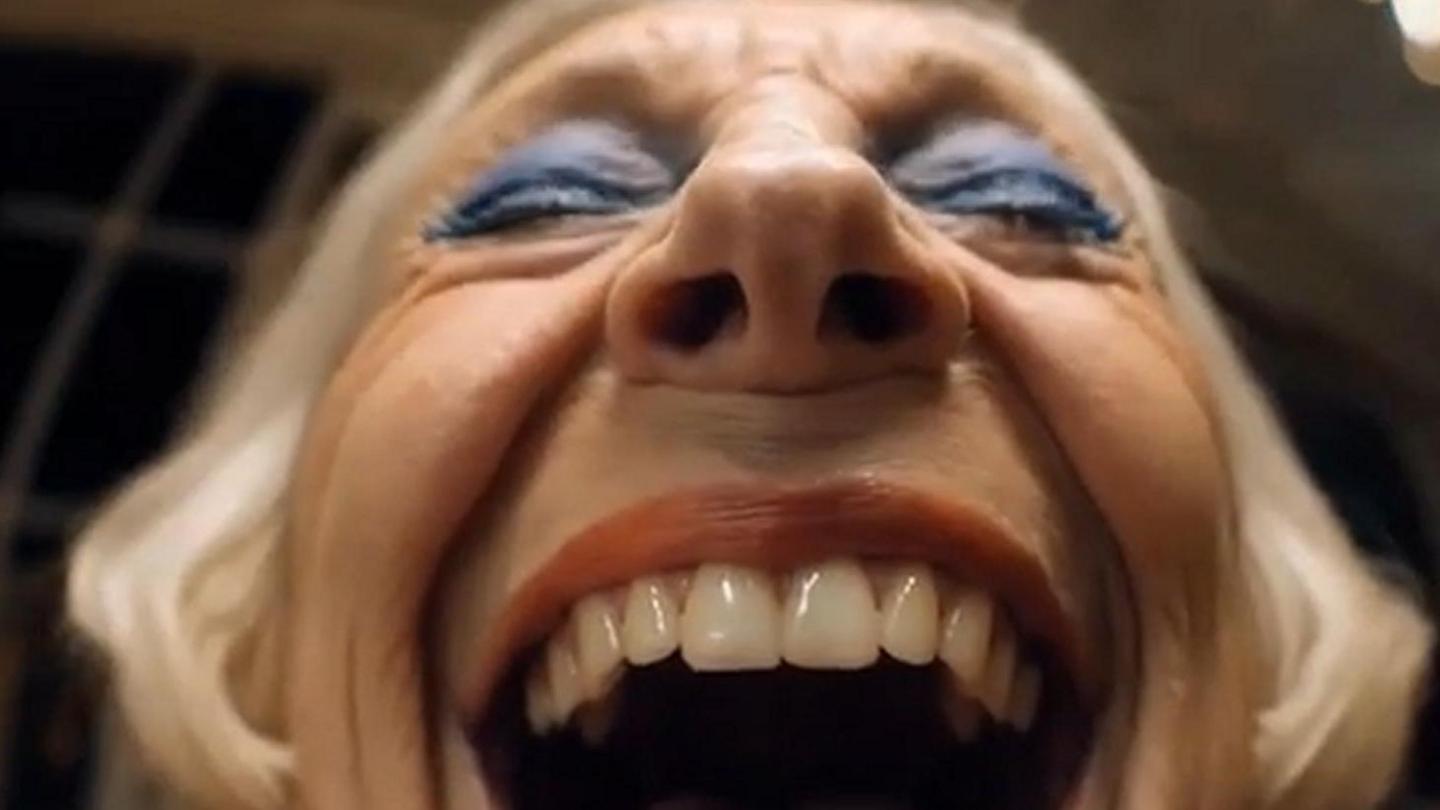
DIRECT ANSWER: In advertising, uncanny usually comes from small violations: faces that don’t behave anatomically, textures that drift, lighting that changes without cause, and movement that ignores weight. You don’t need a single “big glitch”, lots of micro-errors add up to “cheap” or “wrong”.
The AI Video Failure Modes:
- Texture drift: Surface patterns migrate or morph without physical cause
- State popping: Objects change configuration between frames
- Specular inconsistency: Reflections don’t match light sources
- Anatomical violations: Faces deform, hands have wrong finger counts
- Momentum failures: Objects move without weight or believable inertia
- Plastic-y slop: Surfaces lack material history or micro-variation
Why advertising is harsher than film
In a feature film, viewers grant suspension of disbelief for 90+ minutes. In advertising, you have 6 seconds of scrolling attention. The threshold for “this feels wrong” is brutal. If the audience notices the medium, they stop believing the message.
Case Study: McDonald’s Netherlands
McDonald’s Netherlands commissioned an AI-generated holiday ad. Within hours, comment sections filled with “uncanny valley” and “creepy.” Faces distorted. Textures looked like melted wax. Comments were disabled. The ad was pulled after three days.
The Physics of Trust: micro-imperfections as proof
DIRECT ANSWER: Stop-motion carries “human residue”: tiny asymmetries, fingerprints in clay, fibres catching light, minute jitter from real hands. These micro-imperfections are hard to fake consistently, and the brain reads them as proof that a real object existed in real space.
Micro-imperfections as signatures of reality
- Clay holds fingerprints from the animator’s touch
- Felt fibres catch light at micro-scale
- Wood grain is unique to each piece
- Motion jitter from manual manipulation
- Light behavior follows physics
The Rewind Test
Pause any stop-motion frame. Rewind three seconds. Can you infer how the object got there? With stop-motion: yes. With AI video: often no. The output has coherence without causality.
Key principle: Real materials don’t just render, they remember.
Practical effects vs CGI: when does physical beat digital?
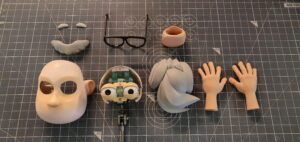
DIRECT ANSWER: Physical beats digital when the campaign needs tactile credibility: products, packaging, food, heritage craft, premium cues. CGI wins for impossible moves and abstract worlds. The sweet spot is hybrid: practical base for trust, digital to extend reality.
Choose stop-motion when:
- Product/packaging needs to feel real
- Brand emphasizes craft or heritage
- Audience has high scrutiny
- Regulatory context where “realness” matters
- Creative becomes long-term brand IP
- BTS content is valuable
Choose CGI/3D when:
- Impossible camera moves or physics-defying action required
- Abstract worlds with no physical referent
- Need for infinite variation at scale
- Very tight timelines
Key principle: Use digital to extend reality, not replace it.
AI-generated video ads fail in three ways: physics, feeling, and facts
DIRECT ANSWER: Most AI ad failures fall into three buckets: physics (movement/light don’t hold up), feeling (human nuance becomes uncanny or cynical), and facts (confident errors that damage credibility). Brands don’t get judged on intent, only on what audiences see.
1. Physics failures
Objects glide without weight. Shadows don’t match light sources. Textures morph. Motion lacks momentum.
2. Feeling failures
Human faces distort. Emotional nuance reads as plastic. The output feels soulless or cynical, undermining the brand promise.
3. Facts failures
AI models confidently generate plausible-sounding information that’s verifiably wrong. This is a reputational and compliance risk.
Case Study: Google Gemini’s “Gouda” Hallucination
Google’s 2025 Super Bowl Gemini ad included a claim about Gouda cheese statistics. The stat was wrong. Google initially defended it, then quietly corrected the creative. The damage: erosion of trust in Gemini’s core value proposition of reliable information.
Key insight: It’s not “AI vs human”, it’s whether the output survives public scrutiny.
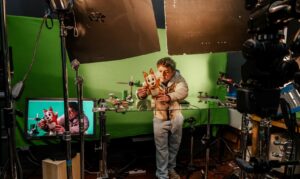
Proof, not polish: the BTS assets that sell the work internally
DIRECT ANSWER: For budget-accountable buyers, BTS isn’t fluff, it’s purchase justification. Time-lapse, build shots, dailies, and “what changed and why” notes make the process legible to stakeholders and de-risk approvals.
BTS serves three functions:
- Internal stakeholder confidence: Procurement and leadership see what they paid for
- Approval de-risking: Transparent process reduces late-stage surprises
- Marketing assets: BTS becomes social content proving authenticity
Professional BTS pack includes:
- Time-lapse of full build and shoot
- Selected dailies
- Lighting diagram
- Frame sheet with annotations
- Material list and sourcing notes
- Producer commentary
How to buy stop-motion without risk: timeline, approvals, and what you approve
DIRECT ANSWER: Stop-motion becomes risky when approvals are vague. De-risk it by agreeing scope, deliverables and approval gates before build begins.
The 5-step process:
Step 1: Brief & Concept
What you approve: Creative concept, mood boards, material palette, character sketches
Step 2: Animatic
What you approve: Timing, shot sequence, storytelling. Changes here are cheap.
Step 3: Build
What you approve: Final build sign-off before shooting. Remote viewing available.
Step 4: Shoot
What you approve: Raw shot approvals (ungraded, pre-VFX)
Step 5: Post & Delivery
What you approve: Final film, all deliverables, BTS pack, IP/usage terms
Key principle: Fast doesn’t mean flimsy — it means focused scope, tight approvals, in-house team that ships.
How much does stop-motion cost?
DIRECT ANSWER: Stop-motion cost depends on what you’re building, shoot complexity, VFX, and deliverables. Focused tabletop/pack work can start from ~£20k+, while larger hero films scale upward with complexity.
The 5 biggest cost drivers:
- Sets & characters: Tabletop vs full character animation
- Shoot days: More screen time = more frames = more days
- VFX & post: Clean-up, compositing, grade complexity
- Deliverables: Hero film + cutdowns + BTS pack
- Usage & IP: Global perpetual vs regional time-limited
What’s in a professional quote:
- Deliverables list (exact specs)
- Approval gates
- Usage rights
- Milestones
- IP ownership
- Assumptions written down

Three ways brands commission stop-motion
DIRECT ANSWER: Most brand briefs fall into three buying shapes: Launch Sprint (4–6 weeks), Hero Film + Toolkit (8–12 weeks), or Always-On monthly cadence.
Option 1: Launch Sprint (4–6 weeks)
Best for: Product launches, seasonal pushes, tight deadlines
Deliverables: Hero film + 1-2 cutdowns + BTS highlights
Option 2: Hero Film + Content Toolkit (8–12 weeks)
Best for: Campaign launches, brand repositioning, high-scrutiny moments
Deliverables: Hero 30-60s film + 5-8 cutdowns/ratios + full BTS pack
Option 3: Always-On Monthly Cadence
Best for: Ongoing content needs, monthly SKU releases, IP-led franchises
Deliverables: 2-4 assets per month
Who This Matters To: Three Buyer Perspectives
Game Launch Marketing Lead
You need platform-ready toolkits, not one-off hero films. Your cadence is brutal: quarterly launches, monthly SKU drops. Stop-motion delivers tangible differentiation — but only if production can match your speed. What you need: 9:16 vertical cutdowns ready day-and-date, BTS as organic social proof, producer who understands launch dates are non-negotiable.
IP Streamer Commissioner
You commission tentpole marketing for high-value IP. Stakeholders include talent, rights holders, global marketing, platform execs. Approvals are scrutinized; reputational risk is high. What you need: Creative excellence and approval discipline. Clear approval gates, remote viewing access, transparent IP/usage terms locked before build begins.
IP Owner Licensing Lead
You guard brand integrity across dozens of licensee activations. Stop-motion signals craft — but execution quality varies. What you need: Production partner with demonstrable quality control, portfolio you can audit, process that respects IP visual language. BTS documentation as audit trail.