13th October 2025
- Blog
Modern stop‑motion can be financially competitive. Four levers make the difference: in‑house integration, parallel production on a multi‑unit stage, a streamlined digital pipeline, and strategic use of UK tax incentives. These can all increase the ROI of stop-motion animation.
The “too expensive” myth (and why it’s outdated)
There’s a persistent myth in our industry. It says long‑form stop‑motion is beautiful but impractical, too slow and too expensive for modern budgets.
The truth is simpler: that view describes an old, fragmented production model. We re‑engineered the model around financial outcomes.
This guide walks through the business case. It shows how a purpose‑built studio, an integrated pipeline, and UK incentives like UK animation tax credits combine to deliver predictable budgets and stronger ROI for series, features, and premium kids’ IP.
Deconstructing the efficiencies: a four‑pillar financial model to increase the ROI of Stop-motion
Pillar 1 – In‑house integration: cut vendor markups & delays
Traditional long‑form stop‑motion often uses a patchwork of vendors. External model shops, rented stages, off‑site post, and freelance coordination all add friction. Every hand‑off adds a markup and a wait.
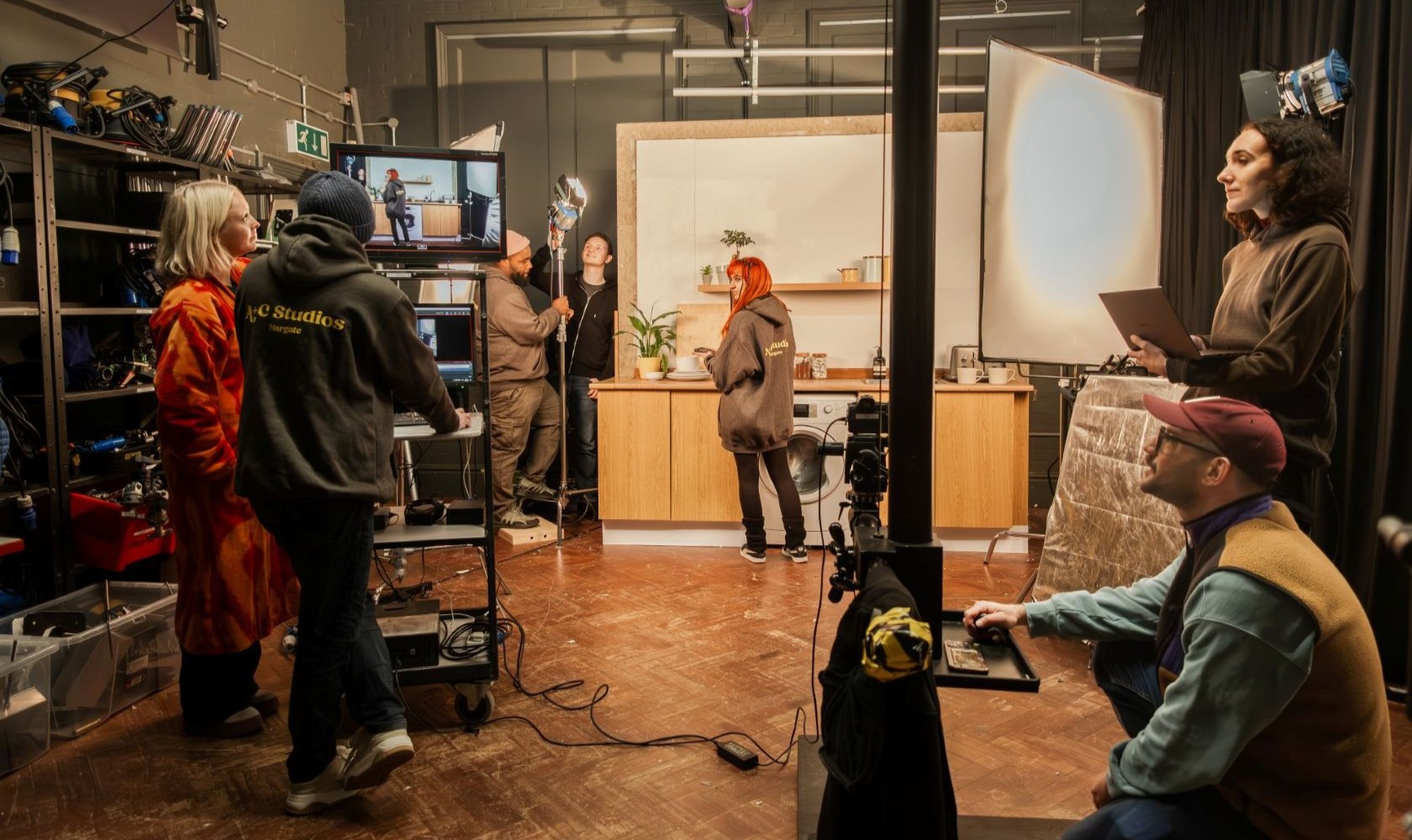
Our approach puts the entire pipeline under one roof. Pre‑production, model making, animation units, on‑site post, and finishing sit together. That removes friction and reduces compounding risk.
Where the savings land
- No external stage hire (and no double markups via third‑party line items).
- No third‑party PM fees or duplicate coordination overhead.
- Minimal shipping and transport of fragile puppets and sets across vendors.
- Faster approvals and changes (talent and assets are in the same building).
- We centrally plan crew scheduling, set turnover, and asset reuse to keep use predictable.
Head of Production, Ollie Perrin: “Every time a project leaves your building, you add two things to the budget: a markup and a delay. Keeping the sculpt‑to‑grade pipeline in‑house removes both and that’s the single most effective way to control a long‑form budget.”
Risk‑mitigation for financiers
With integrated control you get dependable burn rates, fewer unknowns, and cleaner cash‑flow planning. That’s exactly what Simon (Finance) and Priya (Line Producer) need to green‑light with confidence.

Pillar 2 – The Postgate Stage: parallel production that compresses schedules
Stop‑motion is linear until you design for concurrency. We engineered the Postgate Stage for multi‑unit production – up to 15 concurrent animation units – so we can shoot multiple scenes and episodes at once. Shorter schedules directly reduce overhead months, studio occupancy, and crew weeks. That’s hard, measurable money which all impact the ROI of stop-motion.
Illustrative schedule compression
| Scenario | Units | Shoot weeks | Monthly overhead (illustrative) | Total overhead |
| Fragmented model | 4 | 48 | £120k | ~£1.38M |
| Parallel model (Postgate Stage) | 12-15 | 24-28 | £120K | ~£720K-£840k |
Why it matters to Finance & Production
- Finance: Fewer months of opex and interest carry; cleaner milestone billing.
- Production: Realistic buffers for pickups without slipping delivery.
- Edit/story: Earlier episodes lock while later episodes shoot, accelerating cash collection.

Pillar 3 – The digital pipeline: fewer revisions, less waste
The hidden cost in animation isn’t always sculpting or shooting. It’s waiting, for notes, for transfers, for someone to find the latest plate.
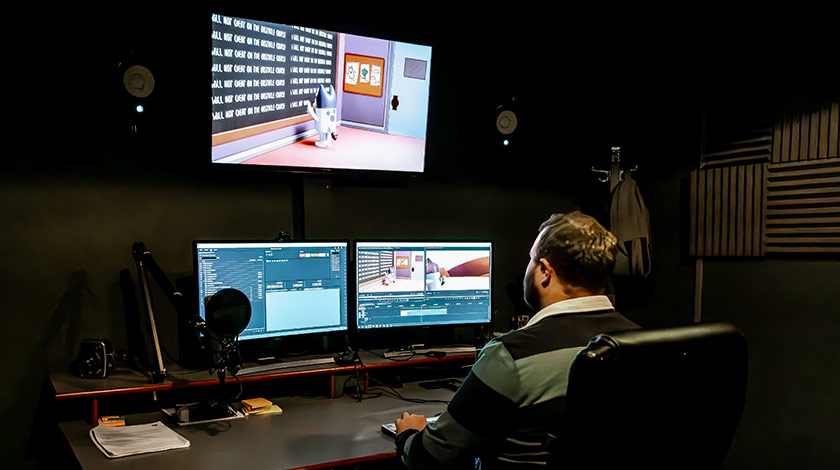
We run a ShotGrid‑based (now Autodesk Flow Production Tracking) workflow. It is our single source of truth for shot and asset tracking, review, and approvals.
We pair it with disciplined media asset management, calibrated colour workflows, and on‑site finishing. Together, they remove days of waste across a series.
What that looks like in practice
- Shot & asset tracking: statuses, dependencies, and blockers are visible in real time, no “where is it?” lag.
- Review & approvals: centralised annotations reduce rework and version drift.
- Calibrated colour & IO: consistent plates and dailies reduce grading surprises late in the schedule.
- Security by design: we align with Trusted Partner Network (TPN) content‑security principles, important for streamers and global brands safeguarding pre‑release assets.
The bottom line: shorter feedback cycles, tighter version control, and fewer re‑shoots. Those savings land directly on crew time and stage days which help increase your ROI of stop-motion.
Pillar 4 – Strategic UK co‑production & tax incentives: unlock AVEC
For qualifying productions, the UK Audio‑Visual Expenditure Credit (AVEC) significantly improves the project economics. As of the current regime:
- Animation & children’s TV: 39% credit on qualifying UK core expenditure.
- High‑end TV & film: 34% credit on qualifying spend.
- A new 53% rate exists for eligible lower‑budget independent films (different criteria and timelines).
To claim, projects must be certified British (typically via the BFI cultural test or an official co‑production). The cultural test is points‑based. Animation TV needs 16 of 31 points across content, contribution, and UK use of talent and facilities.
Simple, realistic maths
- Budget: £5M animated preschool series.
- Qualifying UK core expenditure: 50% (£2.5M).
- AVEC rate for animation/children’s TV: 39%.
- Credit: £975k (nearly £1M).
This changes the financing model without limiting creative scope. (Actual outcomes depend on structure and tax circumstances; speak to your advisers.)
Why partner in the UK with A+C
We act as your UK production and co‑production partner. Our role is to guide your cultural‑test strategy and align spending to maximise qualifying core expenditure. We integrate AVEC planning into schedules and cash flow from the very beginning, before you lock the budget. We aim to help you deliver the highest ROI of stop-motion possible.
For international producers and streamers, this lever can close the gap between ambition and affordability.

What this means for your series, feature, or preschool IP
Creative consistency without overspend
- Visual consistency across episodes via shared art direction, asset libraries, and calibrated colour management.
- Performance consistency through animation lead sheets, pose libraries, and cycle reuse to sustain character nuance across long‑form.
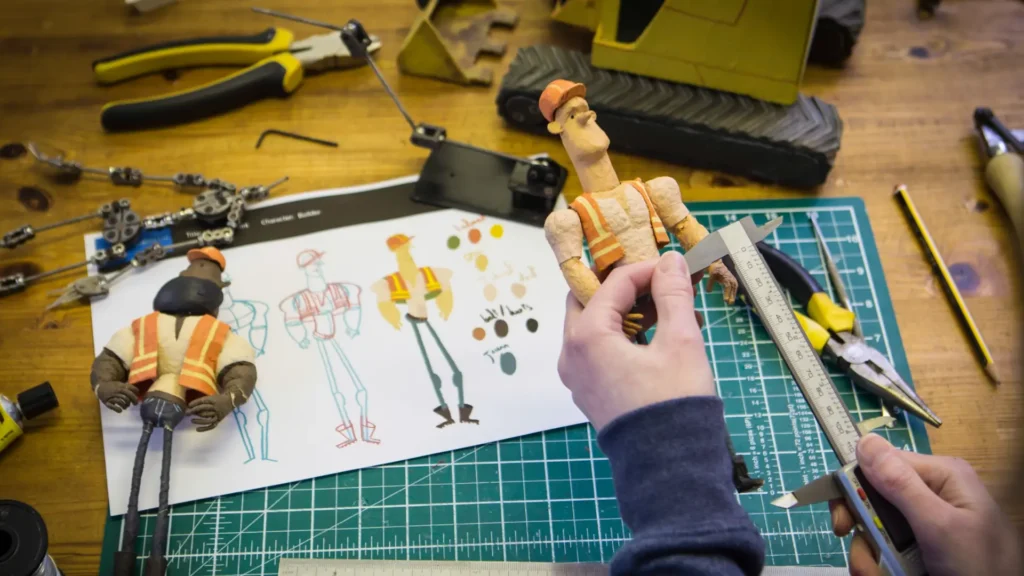
- Scale assets smartly. 3D‑printed armatures and repeatable moulds for crowds and backgrounds reduce per‑episode marginal cost while preserving handmade tactility.
Development support that de‑risks finance
- Pitch‑bible guidance (format, tone, character dynamics, toyetic potential).
- Pre‑production tests: camera angles, animation styleframes, and teaser beats that prove tone and schedule assumptions.
- Explainer videos and sizzle edits tailored for commissioning and investor conversations.
Security & compliance for global brands
We operate to TPN‑aligned practices for content security and can support the documentation streamers require. (TPN is the MPA’s global content‑security initiative used across film/TV supply chains.)
Budget modelling: a transparent starting point
When we scope long‑form, we share a line‑of‑sight model that ties creative choices to financial impacts:
- Asset build strategy → affects upfront capex but reduces per‑episode cost.
- Unit count & stage plan → compresses shoot weeks; lowers overhead months.
- Digital pipeline rigour → fewer revisions; fewer re‑shoots.
- UK AVEC & cultural‑test plan → direct credit impact; certainty on what qualifies.
We translate this into a per‑minute or per‑episode rate with contingency bands and ‘what‑if’ toggles (for example: +3 units, +5% AVEC‑qualifying spend, or extended post).
FAQs
Is stop‑motion still slower than CG?
Not when you plan for parallel work. With 10–15 units and a reusable asset library, stop‑motion’s schedule can rival CG for certain formats. You still get the tactile charm audiences love. The cost advantage shows up in reduced overhead months and efficient reuse.
What qualifies as “core expenditure” for AVEC?
In broad terms, qualifying UK production spend tied to making the programme (for example, on‑set production costs). Ask your tax adviser to map categories precisely for your structure. Our job is to plan production so we maximise eligible spend and evidence it properly.
How do we pass the cultural test?
Design for it early: UK facilities and crew, British settings and references where they help the story, and compliant crediting. UK Animation Tax credits needs 16 of 31 points to qualify, secured across on‑screen and production criteria.
Conclusion: the business case for stop‑motion
Affordable long‑form stop‑motion isn’t about cutting corners. It comes from a purpose‑built stage, in‑house integration, a disciplined digital pipeline, and a UK incentive strategy that makes the numbers work.
The question is no longer “Can we afford stop‑motion?”
It’s “Can we afford to ignore a production model that delivers standout creative with this level of budget efficiency?”